Epidural Steroid Injection
An epidural steroid injection places anti-inflammatory corticosteroid medication directly into the epidural space of the spine under fluoroscopic guidance — reducing nerve root inflammation and delivering targeted relief for herniated discs, spinal stenosis, and radiculopathy without surgery.
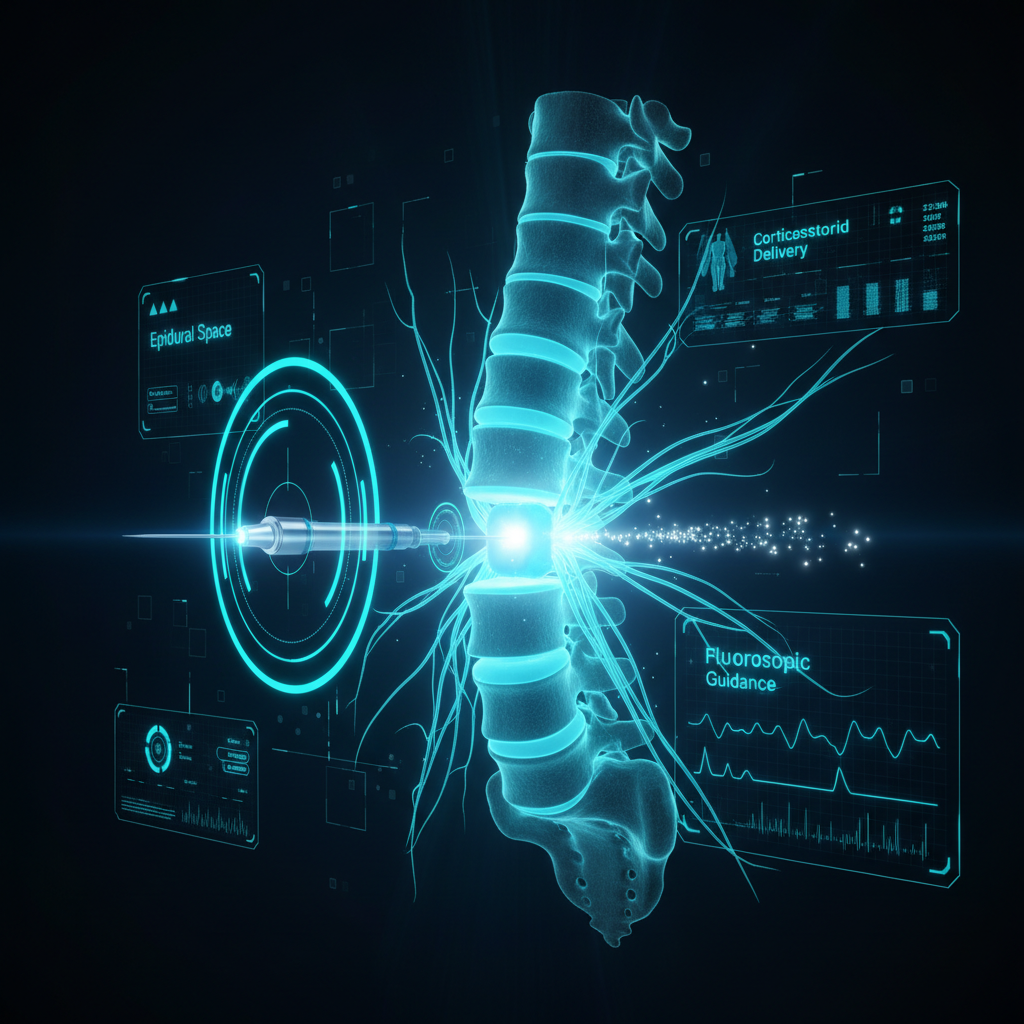
Epidural steroid injections are a minimally invasive, outpatient treatment for spine-related pain caused by nerve inflammation. Corticosteroid medication is delivered directly to the epidural space — the area surrounding the spinal cord and nerve roots — bypassing the systemic route of oral drugs for faster, more targeted relief. The procedure is performed under real-time fluoroscopic (X-ray) guidance, takes 15–30 minutes, and requires no hospital stay. Relief typically begins within 3–7 days and can last weeks to months. When combined with physical rehabilitation, epidural injections are an evidence-based, non-surgical strategy for managing herniated discs, sciatica, spinal stenosis, and related conditions.
Advanced Features of Epidural Injection Therapy
Each epidural steroid injection is engineered for precision — combining image-guided technology with individualized protocols to deliver targeted relief at the exact source of spinal nerve pain.
Fluoroscopic Image-Guided Precision
Real-time X-ray (fluoroscopy) guidance ensures corticosteroid medication is delivered exactly to the inflamed epidural space — eliminating guesswork and maximizing therapeutic accuracy.
Direct Anti-Inflammatory Delivery
Corticosteroid is placed at the nerve root — bypassing systemic circulation for faster, more concentrated relief than oral medications.
Outpatient Same-Day Procedure
Performed entirely in-office in 15–30 minutes. No hospital admission, no general anesthesia, no overnight stay required.
Rapid Onset of Relief
Most patients experience measurable pain reduction within 3–7 days, with effects lasting weeks to months per treatment session.
Individualized Treatment Protocol
Each injection plan is customized to the patient's specific pain location, spinal level, diagnosis, and functional recovery goals.
Integrated Rehabilitation Pathway
Injections are paired with physical therapy and supportive care — creating a synergistic approach for durable, long-term outcomes.
Low-Risk Safety Profile
When performed by a board-certified interventional pain specialist under image guidance, epidural injections carry a very low complication rate.
Dual Therapeutic & Diagnostic Value
The body's response to the injection helps confirm the exact pain generator — providing critical diagnostic insight that guides future treatment decisions.
Why Patients Choose Epidural Injections
- Directly targets nerve inflammation at its anatomical source — not systemic masking
- Relief can last weeks to months per treatment session
- Reduces dependence on oral pain medications and their systemic side effects
- Restores mobility and accelerates return to daily activities
- Evidence-based non-surgical alternative for acute and chronic spine pain
- Supports long-term outcomes when combined with physical rehabilitation
- Lowers the risk of requiring more invasive surgical procedures
- Quick outpatient procedure — no overnight hospital stay required
- Corticosteroids reduce swelling and pressure on compressed nerve roots
- Can be repeated in a series of up to three injections annually
- Fluoroscopic guidance maximizes accuracy and minimizes complications
- Integrated into a comprehensive, individualized pain management plan
Epidural steroid injections are endorsed by the American Society of Interventional Pain Physicians (ASIPP) and the North American Spine Society (NASS) as a first-line interventional treatment for radicular pain and spinal stenosis. Clinical studies demonstrate up to 85% short-term success rates for appropriately selected patients.
Epidural injections are most effective when integrated with a structured physical therapy program. The injection reduces acute inflammation and pain — creating a therapeutic window during which patients can engage in rehabilitation exercises that address the underlying biomechanical contributors to their condition.
What to Expect: Step-by-Step
Evaluation & Imaging Review
Your physician reviews your MRI or CT imaging, medical history, and pain profile to confirm candidacy and identify the precise spinal level for injection.
Positioning & Local Anesthesia
You are positioned on the procedure table. The skin and underlying tissue are numbed with local anesthetic for patient comfort.
Fluoroscopic-Guided Needle Placement
Under real-time X-ray guidance, the physician advances the needle to the epidural space and confirms precise placement with contrast dye.
Medication Delivery & Recovery
Corticosteroid and local anesthetic are injected. You rest briefly in recovery, then return home the same day with post-procedure instructions.
Epidural Injection FAQ
Direct answers to the most common questions about epidural steroid injections — procedure, results, safety, and candidacy.
Ready to Find Relief?
Schedule a consultation with our board-certified interventional pain specialists to determine if epidural steroid injections are right for your condition.
Book a Consultation