Peripheral Nerve Stimulation
Peripheral nerve stimulation (PNS) is a minimally invasive neuromodulation therapy that implants a small electrode adjacent to a targeted peripheral nerve. Precisely calibrated electrical impulses interrupt chronic pain signals at their anatomical source — before they reach the spinal cord or brain — delivering programmable, drug-free, and fully reversible relief for localized nerve-mediated pain conditions.
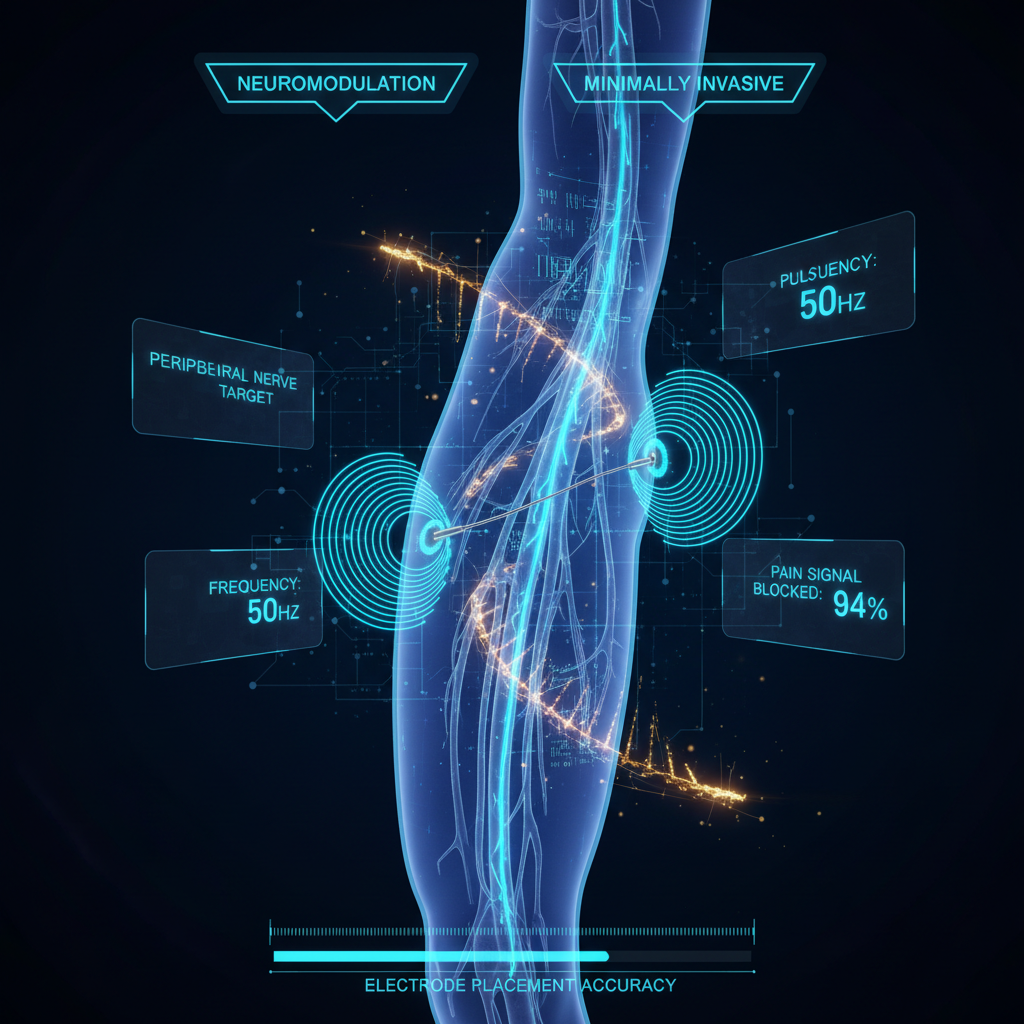
Peripheral Nerve Stimulation — The Essential Summary
PNS is a proven, FDA-cleared neuromodulation therapy for chronic localized nerve pain. A hair-thin electrode is placed alongside the target peripheral nerve under imaging guidance — no major surgery, no general anesthesia. A 7–14 day trial confirms ≥50% pain relief before permanent implantation. The wireless, programmable device delivers continuous bioelectric pain modulation, reducing opioid dependence by 40–60% and restoring function for conditions that have failed all conservative treatments. Fully reversible at any time.
Key Features
Conditions Addressed
Advanced PNS Features
Our peripheral nerve stimulation program integrates the latest neuromodulation technology with precision imaging guidance — delivering measurable, reproducible outcomes for complex chronic pain conditions.
Precision Electrode Targeting
Ultrasound- and fluoroscopy-guided lead placement positions the electrode within millimeters of the target peripheral nerve — ensuring maximum stimulation coverage and optimal pain signal interception at the anatomical source.
Bioelectric Pain Modulation
Calibrated electrical impulses at 40–80 Hz disrupt aberrant pain signal transmission along the peripheral nerve fiber, replacing pain perception with a gentle paresthetic sensation or complete signal block.
7–14 Day Diagnostic Trial
A temporary external trial system confirms ≥50% pain reduction before permanent implantation — eliminating guesswork and ensuring only proven responders proceed to the definitive device.
Wireless Neuromodulation Control
Bluetooth-enabled patient programmer allows real-time adjustment of pulse width, frequency, and amplitude — personalizing stimulation parameters as your pain patterns and activity levels change over time.
Opioid-Sparing Mechanism
PNS activates endogenous pain inhibition pathways — including descending noradrenergic and serotonergic systems — reducing systemic opioid requirements by 40–60% in published clinical studies.
Fully Reversible Architecture
The minimally invasive lead and generator can be explanted under local anesthesia at any time — providing a safety net that no pharmacological or ablative therapy can offer.
Multi-Nerve Stimulation Capability
Advanced systems support simultaneous stimulation of multiple peripheral nerve targets — enabling comprehensive coverage for complex regional pain syndromes affecting overlapping nerve territories.
Objective Outcome Tracking
Validated pain scales (NRS, PGIC, ODI) and functional assessments are recorded at every follow-up — creating a data-driven evidence trail that guides programming decisions and documents your clinical progress.
Benefits of Peripheral Nerve Stimulation
Backed by peer-reviewed evidence and validated by ASIPP and NANS clinical guidelines, PNS delivers measurable functional improvements alongside sustained pain reduction.
The North American Neuromodulation Society (NANS) and American Society of Interventional Pain Physicians (ASIPP) endorse PNS as a Level II evidence-supported therapy for occipital neuralgia, CRPS, and post-surgical nerve pain — with strong recommendations for trial-first implantation protocols.
PNS-mediated pain reduction creates a therapeutic window for active physical rehabilitation — enabling patients to engage in strengthening and functional restoration programs that were previously impossible due to pain-limited mobility.
Conditions Treated with PNS
How Peripheral Nerve Stimulation Works
From initial nerve mapping to permanent implantation, our structured four-phase protocol ensures every patient receives a precisely tailored neuromodulation solution.
Comprehensive Nerve Mapping
Diagnostic nerve blocks and electrodiagnostic studies precisely identify the peripheral nerve(s) generating your pain — confirming PNS candidacy and mapping optimal lead placement coordinates.
Temporary Trial Implantation
Under ultrasound or fluoroscopic guidance, a thin trial lead is placed adjacent to the target nerve through a needle — no incision required. An external stimulator is worn for 7–14 days to quantify pain relief.
Trial Evaluation & Qualification
If you achieve ≥50% pain reduction during the trial, you qualify for permanent implantation. Our team reviews your pain diary, functional scores, and medication usage to confirm candidacy.
Permanent Implantation & Programming
A permanent lead and subcutaneous pulse generator are implanted under local anesthesia in a 30–60 minute outpatient procedure. Stimulation parameters are optimized before discharge and refined at follow-up visits.
Peripheral Nerve Stimulation — Questions Answered
Comprehensive answers to the most common questions about PNS candidacy, the trial process, device programming, and long-term outcomes.
Interrupt Your Pain at the Source
Our board-certified neuromodulation specialists will evaluate whether peripheral nerve stimulation can deliver the targeted, drug-free, reversible relief you deserve — starting with a no-obligation diagnostic consultation.